

Welcome to A Wild Green Heart. Thank you for visiting - I hope you'll find some soul sustenance here today, or at least something relatable. After the deep woodland magic of last week's repost, it's down to earth with a painful thud today.
It has been a difficult start to February. When Imbolc arrived - something I usually get excited about, not least because it means seeing the back of January for another eleven months - I was really unwell. I practically forced myself out of the house to go to Pomona for a short visit. Thankfully it was dry and relatively mild.
Without being able to access the faculties necessary to create a ritual of any meaningful depth, I simply bought some roses and tulips in a nearby shop. I took these, and a generous bag of ground feed for the birds, and wandered around laying them down in spots at Pomona that are significant to me. I managed a few simple words of blessing, then slunk home to lie on the sofa for a few more hours. It all felt very meaningless, and like I was just going through the motions.
This sense has been symptomatic of my whole month so far. A few recent bouts of illness, the accompanying flares in other chronic symptoms, and the ongoing grey, cold, wet weather have been accompanied by a general sense of malaise. The things I'm doing that usually give me a feeling of purpose, instead all feel like a meaningless waste of time. The combination of those factors has put me in a gloomy mood; one that is about as low as it gets for me. And let's face it, the current state of the world and the rapidly unfolding fuckery of the super-rich - at the expense of everyone else and the planet - isn't exactly cheery. It can all feel pretty bleak.
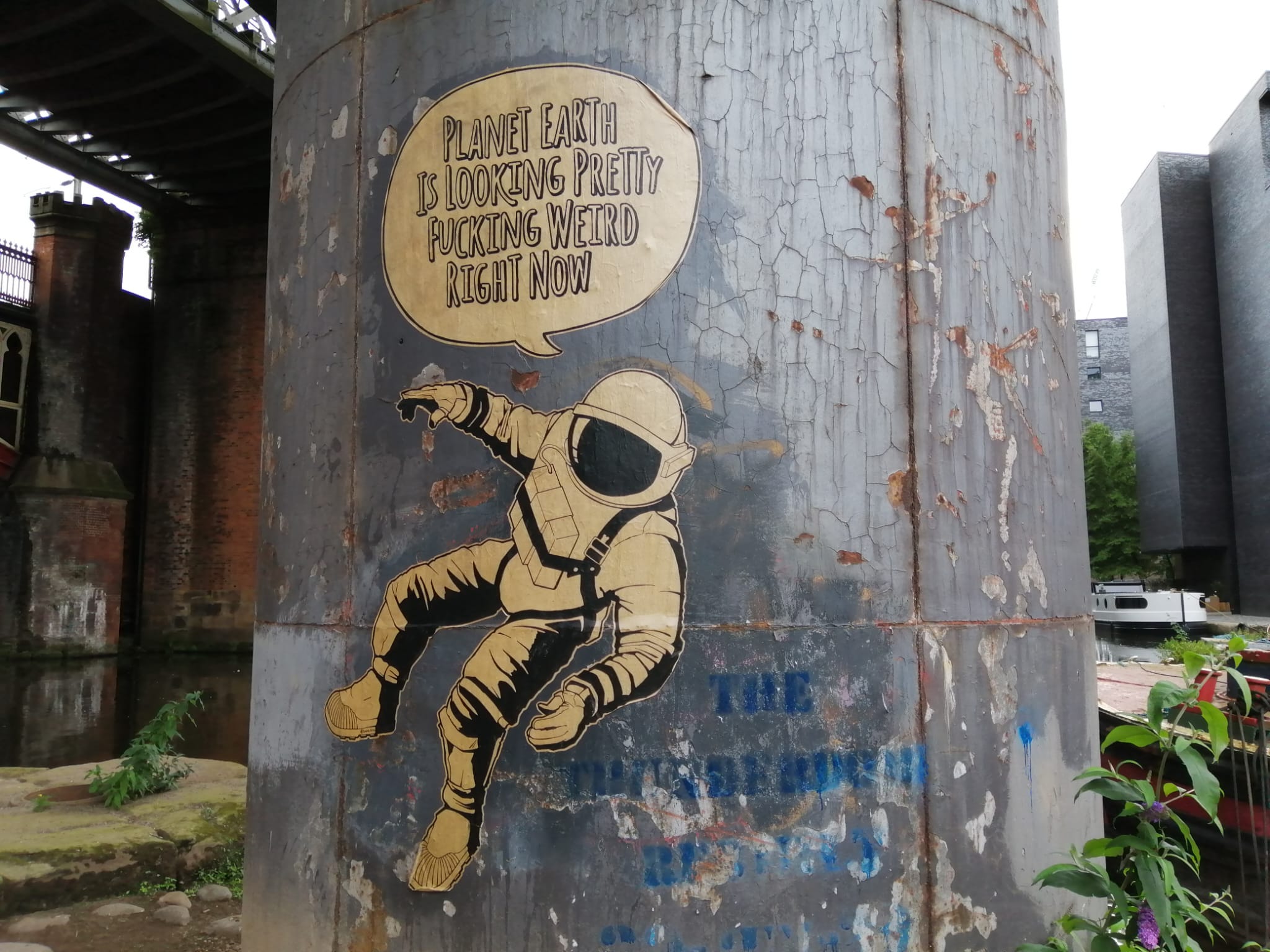
Art by Sneak, 2020
I accept the reality of my low mood, but try not to treat it overly seriously. I know quite a few people whose emotional lows take them far deeper into depression than me, and I'm grateful that I don't have to struggle as hard as some do, or to sink as deep into the inky depths. And also because life has taught me, again and again, that this, too, shall pass. Everything changes, all the time. Bouts of low mood don't last forever.
I'm sharing all this today, just like I've been sharing it with a few friends throughout the week, for two main purposes, namely: it normalises it for me, and it normalises it for you. Experience tells me that if I'm feeling something difficult - even something that feels unfamiliar or downright weird - I'm not going to be the only one who has felt that way. In fact, it's more likely that someone else is actually feeling just like that, right now, and the opportunity to hear from each another in middle of it all might just be the best medicine there is. Closely followed by finding a poem that accurately mirrors your mood, I guess.
So being real about this stuff has become something of a life mission for me. And if people don't like it, that's fine: there are seemingly endless places to go where people are pretending everything's ok, and who throw the F-word around (ie “fine”) as if it means anything at all.
The thing I personally find hardest to wrangle with in these times is the atmosphere of emotional flatness I inhabit. I feel out of touch not only with meaning, but also with feelings. I've learned in recent years that this doesn't necessarily mean that all feeling-states are completely absent or inaccessible. One emotion is almost always close at hand, and I've learned to be thankful for their closeness.
Their name is Grief.
I have a growing gratitude towards grief these days, because personally I'd much rather feel upset, heartache and tearfulness than feel nothing at all. I guess it reminds me that I'm alive, and through grief I'm connected to all Life. It's vitally important, I believe, to view grief in this way - as an ally and a waymarker, rather than as a sign that something is wrong.
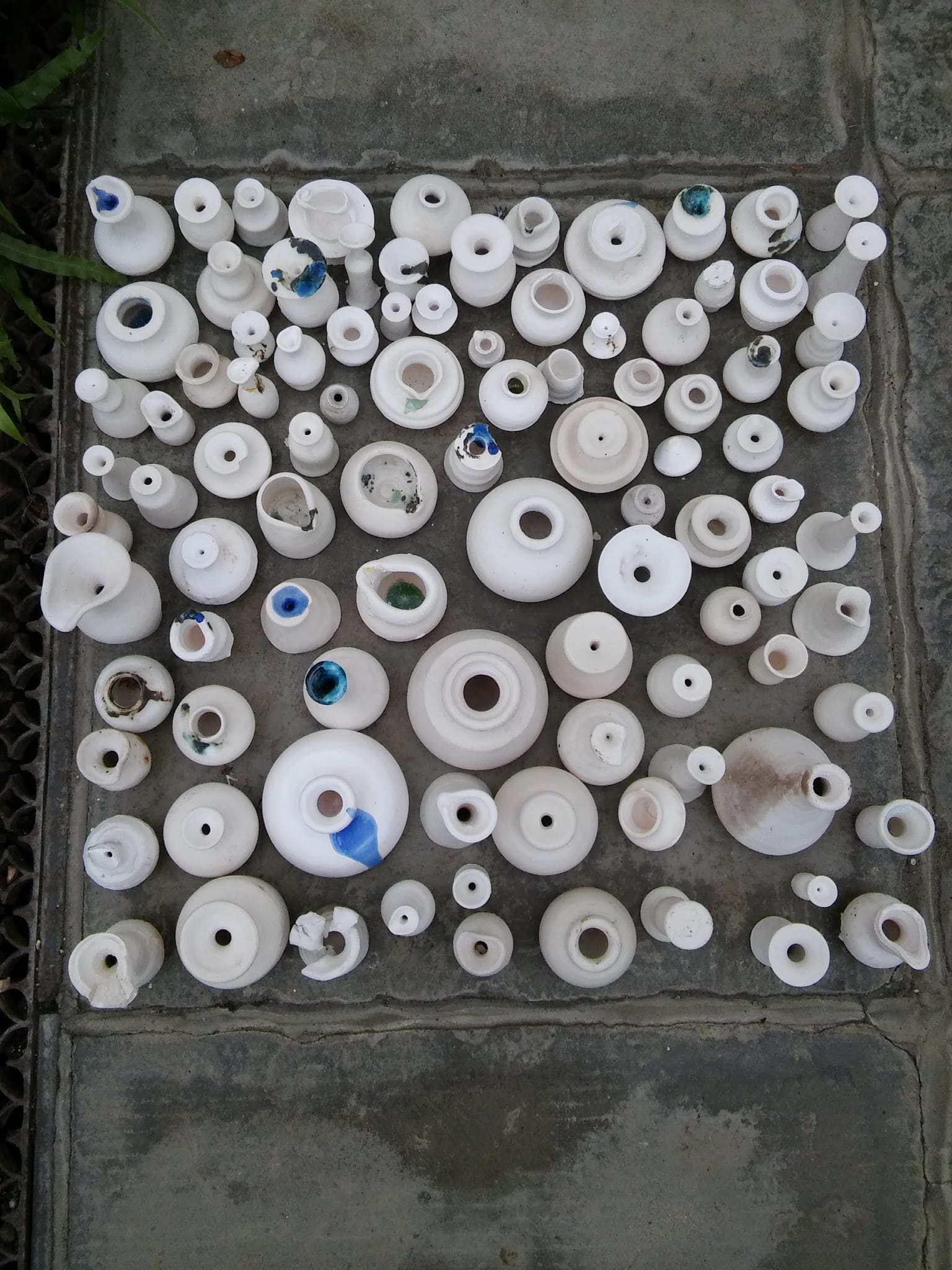
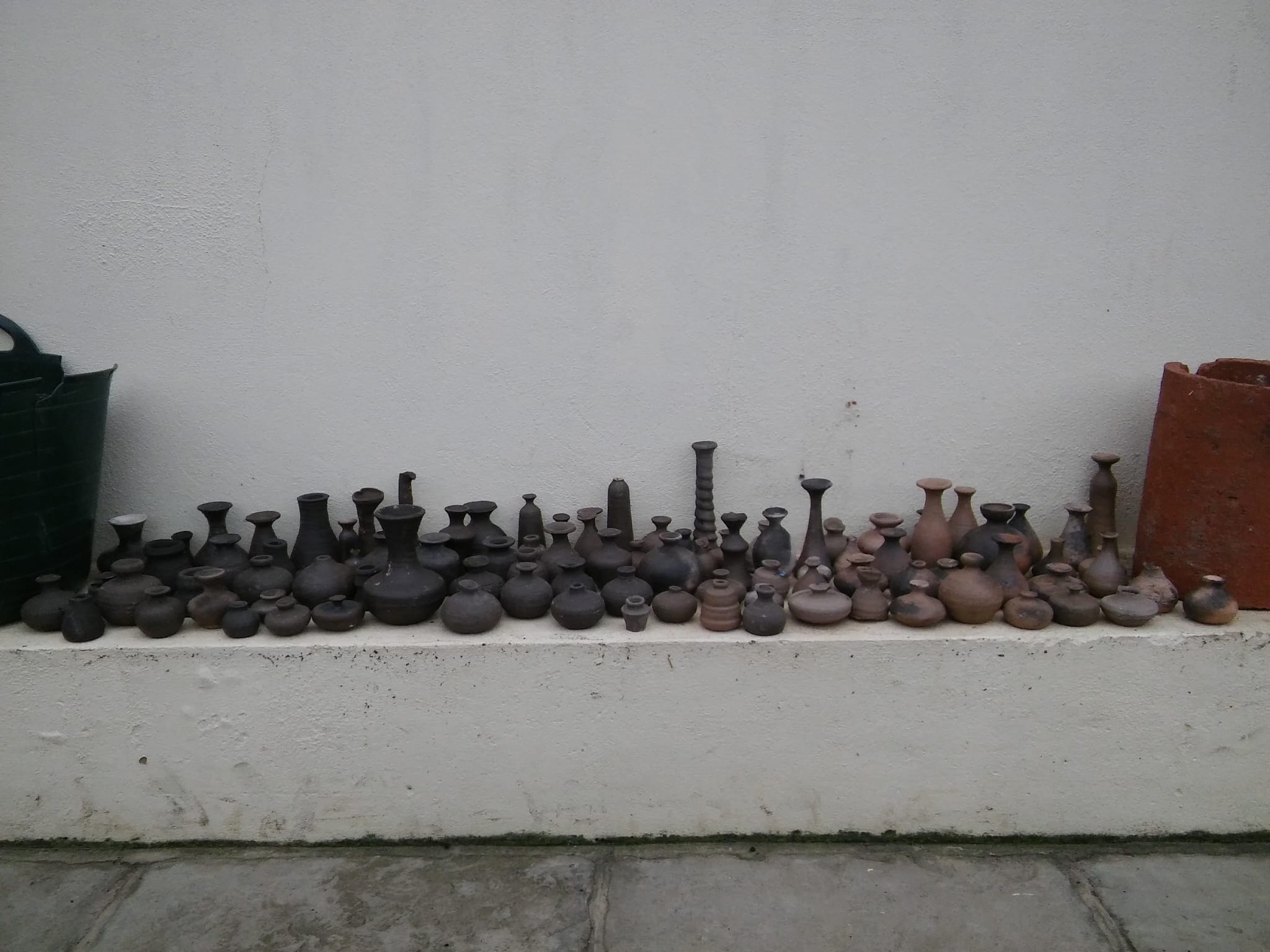
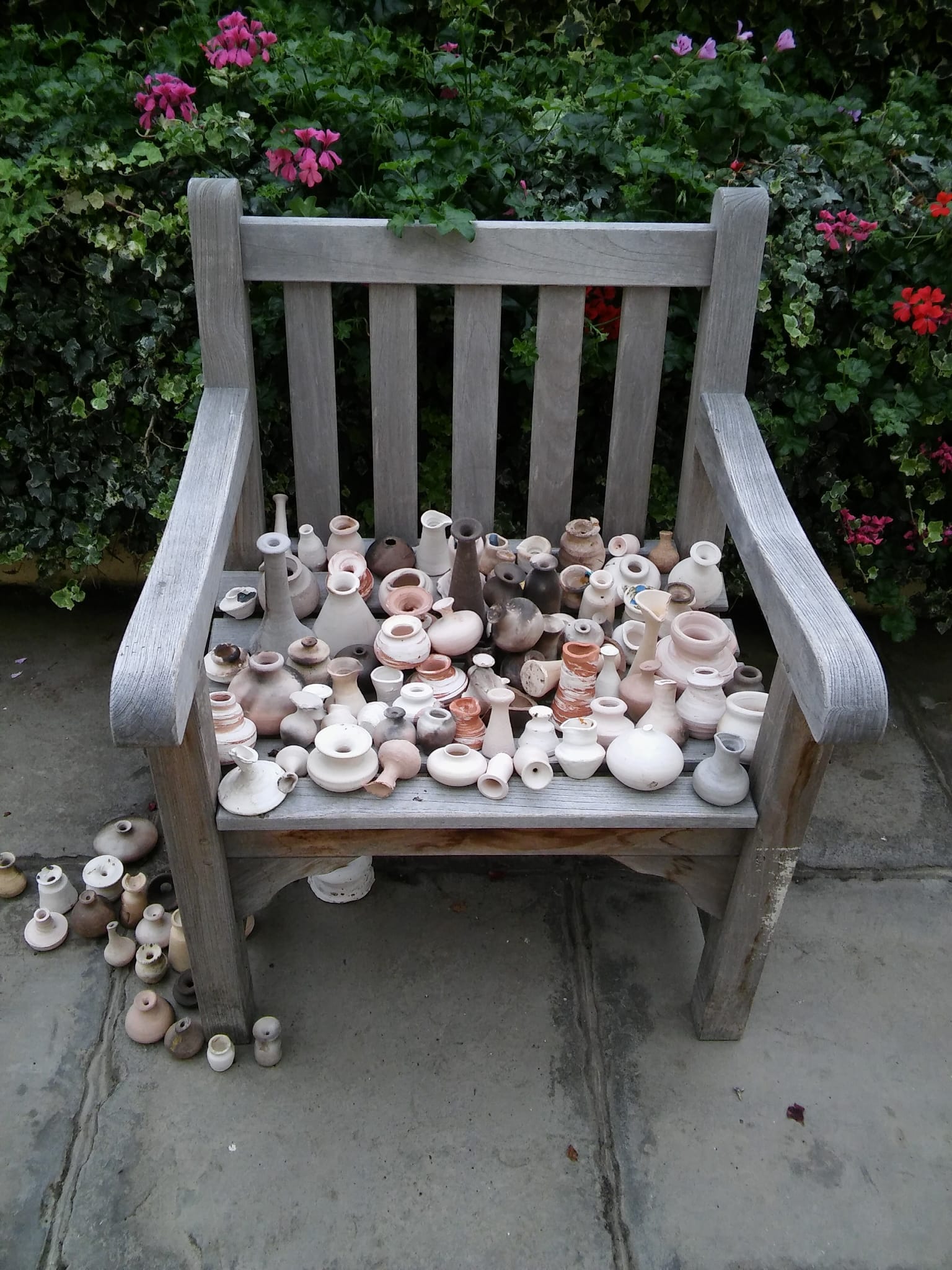
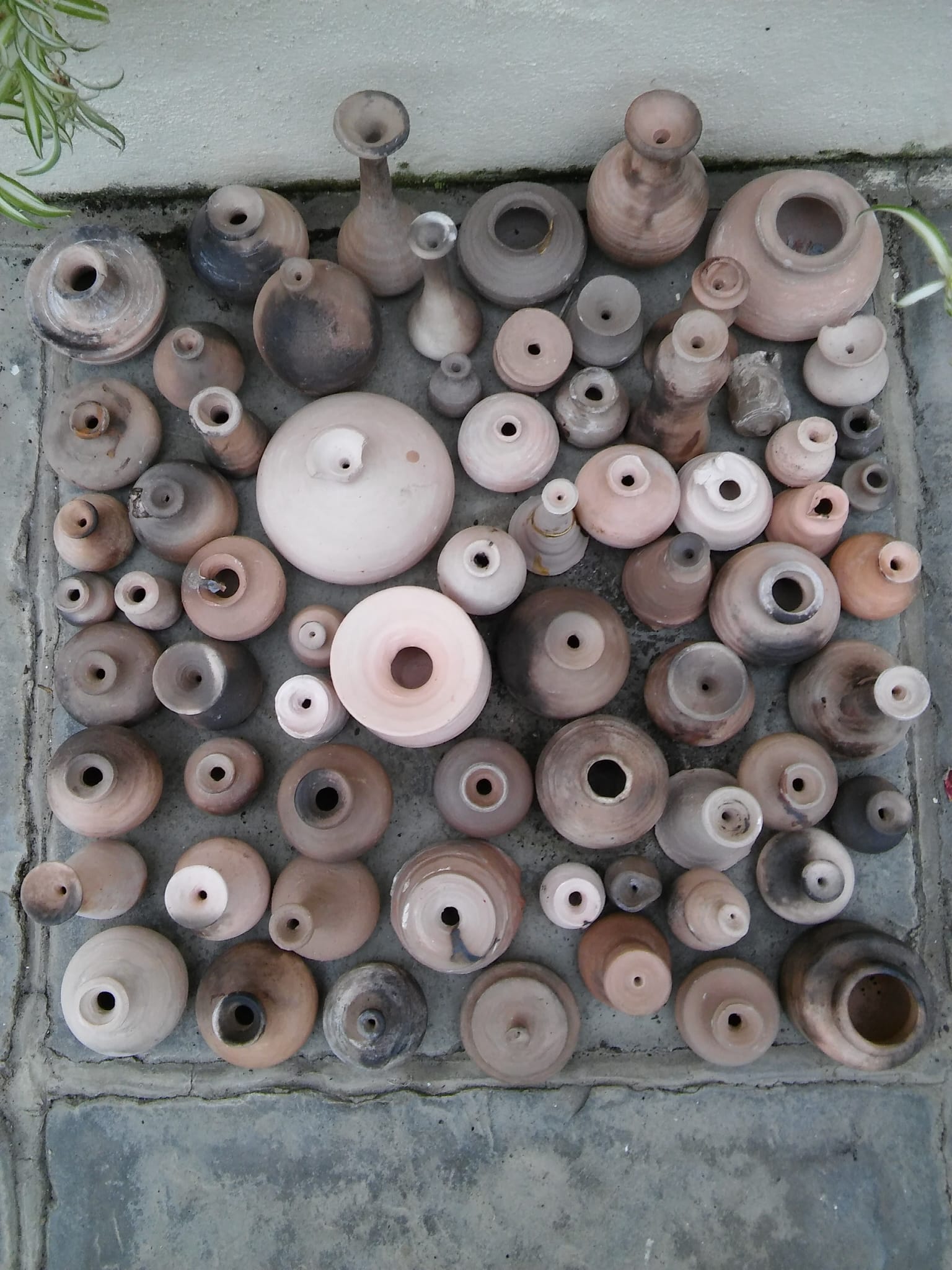
This and following images:
“A Thousand Bottles of Tears” by Deborah Tompsett, 2014
Grief worker Francis Weller often quotes Paul Shepard in regard to this perspective on grief. Shepard said in an interview with Jonathan White, in response to a question about what role others played in the development of our species. (By others he was referring to “animals, plants, rivers, trees; the entire surrounding field that was the ongoing reflection we encountered for hundreds of thousands of years.”)1 Shepard stated:
The grief and sense of loss, that we often attribute to a failure in our personality, is actually a feeling of emptiness where a beautiful and strange otherness should have been encountered.
Yes, do read that again, please! Note that he states that we tend to attribute our sense of grief and loss to a personal failure. The reality is very different. Weller has said and written much in response to Shepard’s words, including this:
We were meant to have a lifelong engagement with a beautiful and strange otherness. It was meant to be an ongoing presence, not an exception…
Animal images were the first to appear in recesses and cave paintings, the first to be conjured in myths and tales. Their ways were integral not only to our survival but to the very shaping of our souls.
Now, in the very shortest wisp of a moment, the perennial conversation has been silenced for the vast majority of us…
The others have retreated and vanished from our attention, our minds, and our imaginations. What happens to our soul life in the absence of others? Shepard says that what emerges is a grief-laden emptiness.
- Francis Weller, In the Absence of the Ordinary - Soul Work for Times of Uncertainty
In other words, the very conditions that most of us were born into, and lived our whole lives in, are devoid of the multiplicity of relationships with other that we evolved to access and experience over millions of years. And, for me at least, the longer I'm alive with an awareness of this, the more powerfully it permeates my everyday life.
So, in my experience, it really doesn't take much to access grief, given that it forms the fabric of our modern, western experience. I'm sure that I find it easier to access than some, simply by virtue of the shape my life has taken due to living with illness and limitations. And surely some others have far easier access than I, because of their own life experiences.
I resonate with these words of Francis Weller: “I have come to have a deep faith in grief, have come to see the way its moods call us back to soul.” This grief has many, many doorways. Here, by way of illustration, are a few of mine from this week:
Sitting in meditation one morning, I thought about Pomona, and the reality that people intend to start digging her up and building flats on her this year. Tears arrived immediately. I longed to be with her, but my body wasn't able to allow that possibility.
Contemplating the reality that I felt far too ill to go and meet friends on two occasions in as many days this week. The kind of small occurrence that is commonplace amongst those of us with ongoing health issues, but that is amplified by our sense of generalised isolation from the other.
Having the opportunity to go and meet friends with my son to play pool - a joyful couple of hours - and realising on arriving home that something as apparently slow and relaxing as playing pool has created ferocious pain in my body.
Contemplating the different complex needs of both of my children, and feeling immensely limited in the ways I can respond to these needs. The ensuing sense of powerlessness was another source of genuine grief.
Accompanying this grief has been another feeling, almost as accessible, that I'm struggling to find a name for. It might be in some ways akin to the Portuguese word saudade, but it's not quite that. It's a strange concoction of grief, gratitude, and joy. A mixture created from connecting with others in a way that causes one to feel seen and valued, while still enduring difficult personal circumstances and feeling physically and emotionally sick. It's perhaps best described by again using some other examples from this week, which has been unusually rich in terms of the generosity I have been offered by people:
The dear friend who reached out to tell me they would like to buy tickets for me and a companion to see a comedy show in my area. She had seen it in London, and wanted to offer the same joy to me up here.
The conversation with a beloved friend in which, in response to my question about what I can offer a community we are both part of, he reassured me that being who I am is of much greater value to them all than any particular task I might take on.
The message from a beautiful friend who told me the ways she would care for me if only she lived closer; and who instead asked me to tell her a favourite eating place so she could order me a meal that I wouldn't have to prepare myself.
Taking my son to a medical appointment and meeting a new GP who was kind, attentive, willing to take the time needed to hear contextual factors, and who offered to write a letter that I was expecting to need another appointment to receive. I'm sure there are many here who can attest to the relief at finding a GP who actually listens, and is happy to take action in response to information shared.
All of this in one week! And, if I'm honest, some of it was elicited from their generous natures precisely because I had been honest about my current state of body, heart and mind. I hope that is of encouragement to some.
Even when the specific griefs seem hard to find, the universal ones are usually present and accessible. The ones aligned to the words I shared from Paul Shepard and Francis Weller, about the emptiness of the conditions we live in. One way I experience this personally is my regular, almost constant grief at the absence of the village. A childhood and adolescence spent without close community, rituals, rites of passage, elders and felt connection to the land and all beings: the very things that would have shaped me into a useful and generative adult. I've had to start learning all that in mid-life, fumbling my way into making ritual and honouring place through a combination of learning from books, sharing ideas with friends, and making shit up as I go along. It's not how it should be, for any of us. The grief is deep, real and enduring.
In thinking about all this, I've returned also to Francis Weller’s beautiful and supportive book about working with grief, The Wild Edge of Sorrow. I read it a few years ago, but it has stayed with me. The most useful and memorable of the chapters in this book, for me, is called The Five Gates of Grief. In it Weller writes:
We are all familiar with the first gate of grief, which is the sorrow we experience with the loss of someone or something we love. The other four gates receive virtually no attention in modern society. Consequently, the grief that accumulates at these thresholds remains untouched, and we feel the growing weight of unattended sorrows. This is often misdiagnosed as depression.
Weller calls this first gate “Everything We Love, We Will Lose”, and what he has to say about this is wise and useful. Personally I found the inclusion of chronic illness in this section very helpful. He writes:
Any lingering illness can activate a feeling of loss. When prolonged sickness arrives in our life, we lament the life we once knew and enjoyed, the one brimming with vitality. We feel emptied and drained, finding little joy or motivation for the day… Illness dislodges our sense of control and invulnerability…
When we are in the grips of illness, a major focus in our mind is the hope of getting back to where we were before this sickness began. But we are not meant to go back…
I can relate so deeply to these words, and all Weller has to say about chronic illness, loss and grief. I'd really like to move onto some of the less familiar gates of grief - some of which were touched on earlier, in the part about our lack of meeting with the beautiful and strange otherness. However, both time and energy are against me, sadly, so for now I'm simply going to list the other four gates to grief, and encourage you to seek out a copy of the book. And perhaps I'll return to this another time. Here they are:
The Second Gate: The Places That Have Not Known Love
The Third Gate: The Sorrows of the World
The Fourth Gate: What We Expected and Did Not Receive
The Fifth Gate: Ancestral Grief
I came across another reminder of grief’s role in our lives in the February chapter of Environmental Arts Therapy and the Tree of Life by Ian Siddons Heginworth. It feels like a good note on which to draw today's post towards an end.
When in therapy we work down through the layers of grief, we always find love to be at the heart of the matter. The love that was lost, the love that never was, the love of self in the face of suffering or the love of what might have been. The love of what is changing, for all things change. We find that grief is a well of ambivalence and ever transmuting feelings.
I've written here before about the inseparable relationship between grief and love. When we open our hearts to love of any kind, we are opening our hearts to loss at the very same time. It is, as already mentioned, the name of Weller's first gate to grief: Everything We Love, We Will Lose. This applies to everything, and is a fundamental reality of life. However, it is our heart's openness to grief that keeps love alive; and our heart's openness to love that keeps grief alive.
This portion of Judah Halevi’s poem, For Those Who Have Died, (found via The Wild Edge of Sorrow) speaks incisively to this truth:
‘Tis a fearful thing
To love
What death can touch.
To love, to hope, to dream,
And oh, to lose.

A thing for fools, this,
Love,
But a holy thing,
To love what death can touch.
All this talk of grief, death, love and loss is probably a good moment to let you know that my latest poetry zine is back from the printers, and is available to you, if you'd like a free copy. It's hard to tell you the title, because it shows the words “Death” and “Life” repeated many times in a circle, meant to convey the endlessness of the relationship between them. So I'm just calling it Death - Life - Death for short!
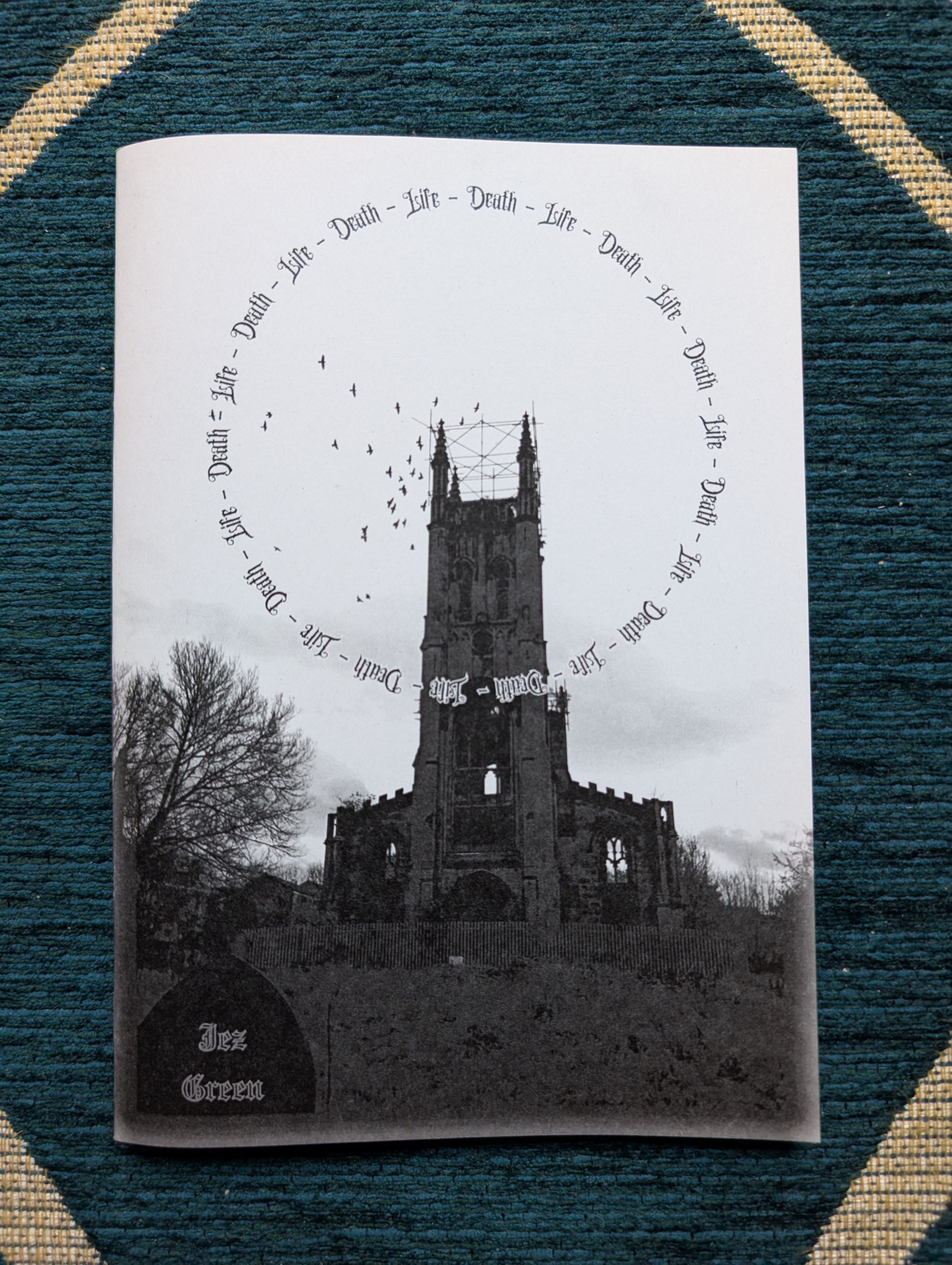
Death - Life - Death - Life ♾️
As I write in the introduction:
Whatever your religious or spiritual beliefs about reincarnation, resurrection, or an afterlife, the simple truth remains: without death, there can be no rebirth. If we ever doubt this, we need only pay attention to a single tree for a single year.
The poems it contains are my explorations of death over the last few years. Poems about finitude and burial; a poem written by my maternal grandfather, and a poem I wrote to my best mate after his father's death. And to finish off today, here's a poem I wrote the morning after my own dad's death, back in late November 2021.
Sometimes the Light

Sometimes the light
in the first hour after sunrise
falls on the walls of
the four-storey red-brick building
opposite my flat, in such a way
that warms me from inside.

This is such a morning,
and in truth I have been waiting
here for hours, hunkered in the dark,
with yoga, podcasts, coffee,
for just this slender moment to arrive:
I simply didn't know it until now.

Last night my father died.
Already in the hospital for days,
fluid in his lungs, infection in his arm,
confusion in his mouth; then stable.
Calm before the storm. Heart
attack - in moments he was gone.

Looking up, I see the glow
has gone as well. The bricks look cold,
the sky that harboured fire
now flat and grey. The warmth inside
remains though, stoked by hands
whose motions disregard the weather.

Sometimes the light
is fleeting; mere momentary glances
of internal incandescence. Oh,
to gaze at what burns deepest in me!
To know myself the urgent moth,
the flare, the fall, the flame. 
Once again, if you would like a free copy of this zine, please just let me know in the comments, or via a message of another kind. Overseas readers will need to cover postage, please.
Thank you, one and all, for being here today. Thank you for witnessing my struggles, griefs, and joys, in all their shapes. What has been moving through you this week? What are you experiencing that you’d like seen and heard by others? Please, do visit the comments and let me know.
Francis Weller, “In the Absence of the Ordinary”, p106


